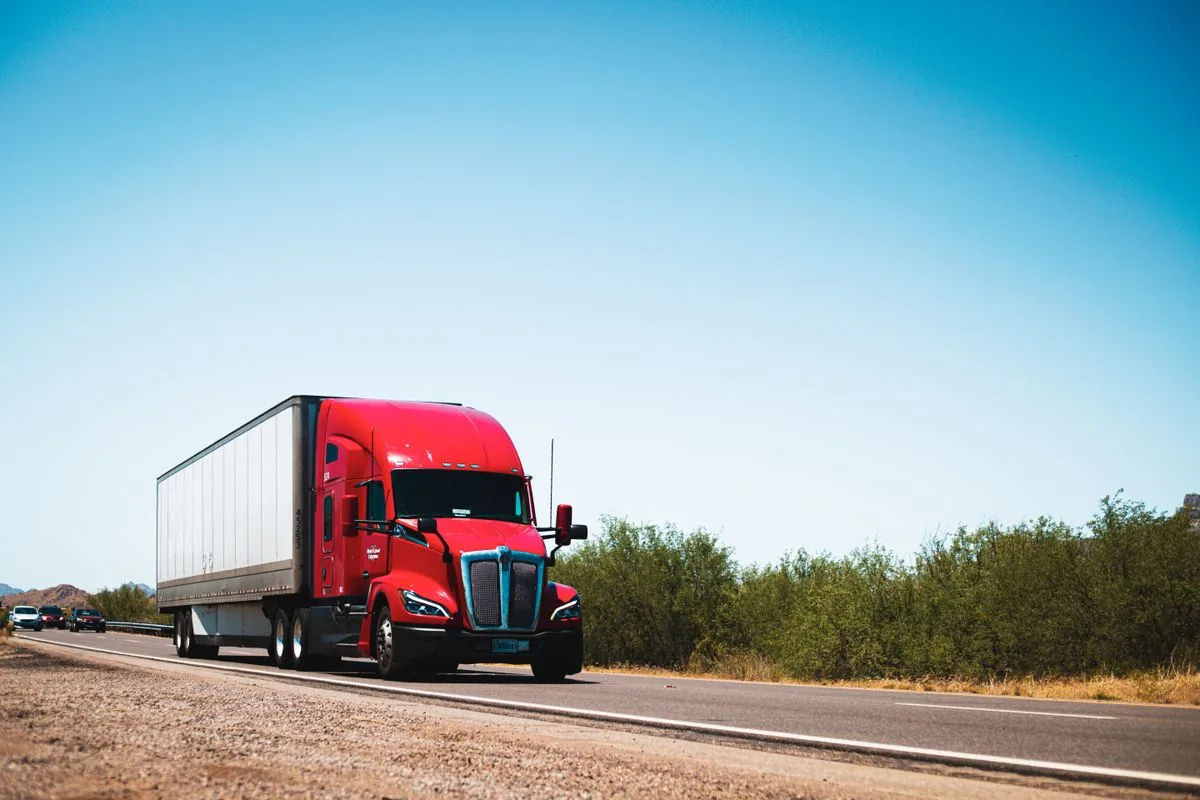
There is no reliable published average for truck accident settlements. Most settlements are private, and the amount follows the injury, the insurance available, and who was at fault, not the kind of vehicle. The two biggest drivers are how severe and lasting the injury is and the insurance a truck must carry: at least $750,000 for most interstate freight carriers, against Illinois’s $25,000 per-person car minimum.
Why is there no reliable average truck accident settlement?
A settlement is the two sides’ estimate of what a jury would likely award, discounted for the cost and risk of a trial. Settlement terms are usually not made public, which the Bureau of Justice Statistics notes when it reports trial results, so there is no registry of truck settlements to average.
The figures that do get published come from verdicts. The American Transportation Research Institute’s 2020 study built a database of 600 trucking cases from 2006 to 2019 and found verdict awards grew 51.7% a year from 2010 to 2018, with nearly 300 cases over $1 million in the last five years of the data against 26 in the first five. Those are cases that went to trial, and the large ones are the ones that get reported.
At the other end, the Bureau of Justice Statistics’ study of 2005 civil trials in 156 counties put the median award in motor vehicle accident trials at $15,000. It does not separate trucks from cars, and it also counts only trials. Neither figure is an average truck settlement, and the two point in opposite directions. More answers on what a claim is worth are collected on the Marker Law blog.
What moves a truck accident settlement up or down?
Each of these is a separate question in the file, and each one can move the number on its own.
| Driver | What it is | Which way it moves the number |
|---|---|---|
| Injury severity and permanence | Whether the injury heals or leaves lasting limits, such as a spinal cord or brain injury | Up as the injury is more severe or permanent |
| Past and future medical care | The bills to date, plus a life-care plan that prices the treatment still to come | Up with each documented future cost |
| Lost wages and earning capacity | Pay already missed, and what the injury takes from what you could have earned | Up with documented loss |
| Insurance available | The policies that can pay; federal minimums for trucks start at $750,000 (next section) | Sets the practical ceiling |
| Number of liable companies | The driver, the motor carrier, the trailer owner, a maintenance contractor, the loader, a broker, each with its own policy | Up as each one adds a policy |
| Your share of fault | Your damages are reduced by your share, and you recover nothing above 50% (735 ILCS 5/2-1116) | Down, and to zero above half |
| Evidence of rule-breaking | Hours-of-service limits of 11 hours driving inside a 14-hour window, with a 30-minute break after 8 hours (49 CFR 395.3), and the electronic log and engine data that show them | Up, because a proven violation makes the carrier’s fault easier to show |
| No cap on pain and suffering | Illinois has no general cap on non-economic damages: its Supreme Court struck the 1995 cap in Best v. Taylor Machine Works (1997) and the malpractice caps in Lebron v. Gottlieb Memorial Hospital (2010) | Valued on the evidence, not cut to a statutory limit |
| Prejudgment interest | 6% a year on a personal injury judgment from the day the suit is filed, measured against the defendant’s best written offer, for up to 5 years (735 ILCS 5/2-1303(c)) | Raises the cost of waiting for the defense once a suit is filed |
How much insurance does a trucking company have to carry?
Federal rules set the minimum liability coverage by what the truck hauls (49 CFR 387.9). Illinois sets a much lower floor for ordinary cars (625 ILCS 5/7-203).
| Vehicle and cargo | Minimum liability coverage | Rule |
|---|---|---|
| For-hire truck in interstate commerce, 10,001 pounds or more, general freight | $750,000 | 49 CFR 387.9 |
| Truck of 10,001 pounds or more hauling oil, hazardous waste, or most hazardous materials | $1,000,000 | 49 CFR 387.9 |
| Truck hauling hazardous substances in bulk, bulk explosives, or certain gases and radioactive material | $5,000,000 | 49 CFR 387.9 |
| Illinois car, bodily injury to one person | $25,000 | 625 ILCS 5/7-203 |
| Illinois car, bodily injury to two or more people | $50,000 | 625 ILCS 5/7-203 |
That gap is why truck settlements spread so much wider than car settlements. A serious injury claim against a car often runs into a $25,000 policy, while a for-hire freight carrier must carry at least thirty times that. The federal levels are minimums, and they apply to for-hire carriers hauling property across state lines and to hazardous-material carriers within a state as well (49 CFR 387.3). A truck that never leaves Illinois and carries no hazardous material is outside them.
How much of a truck accident settlement do you actually keep?
Three things come off the gross figure before the rest is paid to you.
- The attorney’s fee. Under a contingency agreement, the fee is a percentage of the recovery set in the written agreement, and nothing is owed as a fee if nothing is recovered. Whether case costs come out before or after the percentage is figured changes what you net, as what a commercial vehicle accident lawyer costs walks through.
- Case costs. Expert witnesses, accident reconstruction, medical and trucking records, and depositions, paid back from the recovery as the fee agreement provides.
- Medical liens and reimbursement. Hospitals and doctors who treated you can hold a lien on the recovery, but all such liens together cannot exceed 40% of it, no one category of provider can take more than one-third, and only the lienholder can waive or reduce those limits (770 ILCS 23/10). Medicare and employer health plans have their own repayment claims, covered in the questions below.
How long a truck case takes to reach that point is covered in how a truck accident lawyer can help maximize your compensation.
How is a truck injury claim valued before the first offer?
We value a claim as what a jury would likely award if the case were tried, discounted for the risk of trying it; for a DuPage County case, that is what a DuPage County jury would likely award. The general method is in how much a personal injury case is worth.
On a catastrophic injury, the case needs a life-care plan and accident reconstruction, not a quick settlement. A fast six-figure offer on a catastrophic injury is a sign the carrier knows the case is worth more.
A preservation letter from us goes out the day we are hired, and it covers the logs, the engine data, and the dash camera, because those records prove the rule-breaking that moves the number. Each liable company in the chain has its own policy. Whether to accept an offer is always your decision, with our recommendation and the reasons for it.
Jason A. Marker, the founding attorney, spent three years defending insurance carriers before twenty-five years representing the injured. Dan McLean, an attorney at the firm, spent years inside a health insurer resolving liens.
When should a truck injury claim be looked at before you answer an offer?
- The offer arrives before your treatment has ended, or before anyone knows what future care will cost.
- The carrier only has to keep driver logs and supporting documents for at least 6 months (49 CFR 395.8(k)), and after that the evidence of hours violations can be gone.
- More than one company was involved: a carrier, a trailer owner, a broker, a shipper that loaded the trailer.
- The carrier says you were partly at fault. Any share reduces your recovery, and more than 50% bars it (735 ILCS 5/2-1116).
- The 2-year deadline to file an Illinois injury suit is approaching (735 ILCS 5/13-202).
For a family after a fatal truck crash, the claim is a wrongful death case with its own damages, covered in Illinois wrongful death truck accident settlements.
Frequently asked questions
Does a truck accident settlement pay more than a car accident settlement for the same injury?
Not because of the vehicle: the injury, the losses, and the fault are valued the same way. What differs is the money available to pay them. A for-hire interstate truck hauling general freight must carry at least $750,000 in liability coverage, while an Illinois car can carry $25,000 per injured person, and a truck crash often brings more than one liable company.
Is there a cap on pain and suffering in an Illinois truck accident case?
No general cap. The Illinois Supreme Court struck down the 1995 law capping non-economic damages at $500,000 in Best v. Taylor Machine Works (1997), and the medical malpractice caps in Lebron v. Gottlieb Memorial Hospital (2010). Pain and suffering is valued on the evidence of what the injury changed.
Do medical bills paid by health insurance come out of a truck accident settlement?
Often, yes. Medicare’s conditional payments must be repaid when a settlement is made, and an employer health plan governed by ERISA is repaid on the terms its plan document sets, as the Supreme Court held in US Airways v. McCutchen (2013). Liens held by hospitals and doctors are limited in Illinois to 40% of the recovery in total.
Can a truck accident settlement be paid over time instead of in a lump sum?
Yes, as a structured settlement. Federal tax law excludes damages received on account of personal physical injuries from income “whether as lump sums or as periodic payments,” punitive damages aside (26 U.S.C. 104(a)(2)). 26 U.S.C. 130 sets the tax rules for a “qualified assignment,” in which the duty to make those periodic payments is passed to another company.
Can punitive damages be part of a truck accident case in Illinois?
Only after a hearing. A complaint in an injury case cannot ask for punitive damages at the start; the plaintiff must move to add them and show a reasonable likelihood of proving facts at trial to support them, no later than 30 days after discovery closes (735 ILCS 5/2-604.1). Illinois allows them for willful conduct or gross negligence showing a wanton disregard of others’ rights, and treats them as disfavored (Loitz v. Remington Arms, 1990).
Sources
- 49 CFR 387.9, Financial responsibility, minimum levels. Federal Motor Carrier Safety Administration, via eCFR.
- 49 CFR 387.3, Applicability. Federal Motor Carrier Safety Administration, via eCFR.
- 49 CFR 395.3, Maximum driving time for property-carrying vehicles and 49 CFR 395.8, Driver’s record of duty status. FMCSA, via eCFR.
- 625 ILCS 5/7-203, Requirements as to policy or bond. Illinois General Assembly.
- 735 ILCS 5/2-1116, Limitation on recovery in tort actions. Illinois General Assembly.
- 735 ILCS 5/2-1303, Interest on judgment. Illinois General Assembly.
- 735 ILCS 5/2-604.1, Pleading of punitive damages. Illinois General Assembly.
- 735 ILCS 5/13-202, Personal injury. Illinois General Assembly.
- 770 ILCS 23/10, Health Care Services Lien Act, lien created; limitation. Illinois General Assembly.
- Lebron v. Gottlieb Memorial Hospital, 237 Ill. 2d 217 (2010), discussing Best v. Taylor Machine Works, 179 Ill. 2d 367 (1997). Illinois Supreme Court, via FindLaw.
- Loitz v. Remington Arms Co., 138 Ill. 2d 404 (1990). Illinois Supreme Court, via the Caselaw Access Project.
- New Research Documents the Scale of Nuclear Verdicts in the Trucking Industry (June 2020). American Transportation Research Institute.
- Civil Bench and Jury Trials in State Courts, 2005 (2008). U.S. Bureau of Justice Statistics.
- Recovery Process. Centers for Medicare & Medicaid Services.
- US Airways, Inc. v. McCutchen, 569 U.S. 88 (2013). Supreme Court of the United States, via Cornell Legal Information Institute.
- 26 U.S.C. 104 and 26 U.S.C. 130. Internal Revenue Code, via Cornell Legal Information Institute.
For the next step, see how truck crash claims are handled at Marker Law.