

Table of Contents
- Why Your Workers Compensation Claim Was Denied
- Understanding Your Denial Letter
- How to Write a Workers Comp Appeal Letter
- Workers Comp Appeal Process Timeline
- Gathering Medical Evidence for Your Appeal
- Your Options: Reconsideration, Hearing, or Legal Representation
- Protecting Yourself from Employer Retaliation
- Conclusion
Last Updated: August 12, 2026
Why Your Workers Compensation Claim Was Denied
A workers compensation claim denial can feel like a punch to the gut, especially when you’re already dealing with injury recovery and lost wages. Understanding why your claim was denied is the first step toward fighting back. Insurance companies deny claims for specific, documented reasons, and most of them are contestable.
The most common reasons for denial fall into a few categories. The insurer may claim your injury wasn’t work-related, that you failed to report it within the required timeframe, or that medical evidence doesn’t support your claim. Some denials stem from procedural mistakes: missing forms, incomplete documentation, or filing errors. Others hinge on the insurer’s interpretation of your medical condition or wage records.
What matters now is this: a denial letter isn’t final. It’s the beginning of a process, not the end of one. Many workers who receive denials successfully appeal and win benefits. The key is understanding what the letter actually says and responding strategically.
At Marker Law, we’ve helped injured workers challenge denials across complex cases, from construction injuries to traffic accidents. The difference between accepting a denial and fighting it often comes down to knowing your rights and what evidence actually moves the needle with administrative law judges.
Understanding Your Denial Letter
Your denial letter is a legal document, not a casual explanation. It contains specific language that tells you exactly why the claim was rejected and, critically, what you can do about it.
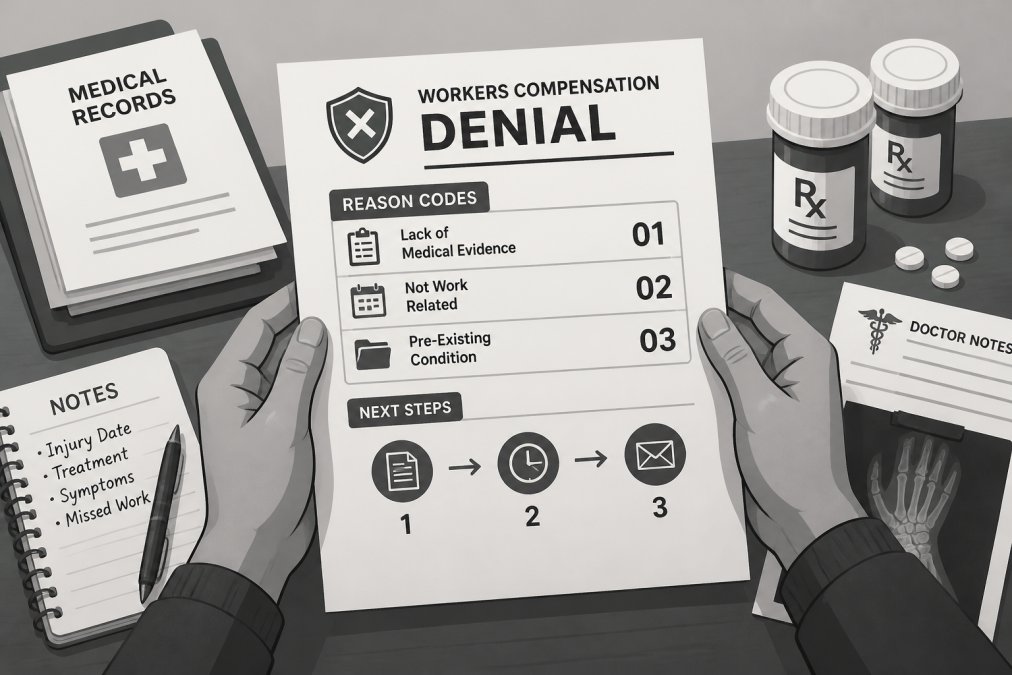
Read the letter carefully, section by section. The insurer must state the reason for denial explicitly. Common language includes "not compensable," "not work-related," "failed to meet filing deadline," or "insufficient medical evidence." Each phrase has legal weight and points toward a different appeal strategy.
Look for the specific statute or rule the insurer cited. If they reference a particular section of state workers compensation law, that’s your roadmap for the appeal. The letter should also include information about your right to appeal, the deadline for filing an appeal, and how to request a hearing before an administrative law judge.
Many denial letters are vague or buried in legal jargon. If you can’t understand why your claim was denied after reading it twice, that’s a red flag. You have the right to clarity. A qualified workers compensation attorney can translate the legal language and identify weaknesses in the insurer’s reasoning.
Pay attention to the date on the denial letter. This date starts a clock. Most states give you 30 to 60 days to file an appeal or request reconsideration, depending on the jurisdiction. Missing this deadline can forfeit your right to challenge the denial. If you’re unsure about the timeline, contact an attorney immediately, this deadline is non-negotiable.
How to Write a Workers Comp Appeal Letter
An appeal letter is your chance to directly address the insurer’s reasoning and present new or clarified information. This isn’t a casual complaint, it’s a formal legal document that will be reviewed by claims adjusters and potentially an administrative law judge.
Start your appeal letter with the basics: your claim number, the date of injury, and your name. State clearly that you are appealing the denial decision. Then, address each reason the insurer gave for denial.
If the insurer claimed your injury wasn’t work-related, explain exactly how the injury occurred at work. Be specific about the date, time, location, and the activity you were performing. Name any witnesses. If you reported the injury to your employer at the time, mention that and include any documentation of that report.
If the issue is insufficient medical evidence, outline the medical records you have and explain why they support your claim. Reference specific medical findings, imaging results, doctor’s notes, diagnoses, that prove the injury is real and work-connected. If you’ve seen additional doctors since the initial denial, include their opinions.
Keep the letter professional and factual. Avoid emotional language or accusations. Stick to the evidence. A single-page letter is often more persuasive than a rambling multi-page document. Your goal is clarity and specificity, not volume.
Include copies of supporting documents: medical records, wage statements, witness statements, employer communications, or any other evidence that strengthens your position. Don’t send originals, always keep copies for your records.
Send the appeal letter via certified mail with return receipt requested. This creates a paper trail proving you filed on time. Keep a copy for yourself and note the date you sent it.
Workers Comp Appeal Process Timeline
The appeal timeline varies by state, but understanding the general framework helps you stay on track and avoid missing critical deadlines.
Most states require you to file an appeal or request reconsideration within 30 to 60 days of the denial letter. This is your first deadline, do not miss it. If you do, you may lose the right to challenge the denial entirely.
After you file the appeal, the insurer has a set period to respond, typically 10 to 20 days. They may overturn the denial, request additional information, or stand by their decision. If they stand firm, you move to the next stage.
The next step is usually a hearing before an administrative law judge. This hearing may be scheduled weeks or even months after your appeal, depending on the judge’s calendar and case volume. You’ll have the opportunity to present evidence, call witnesses, and argue your case. The insurer will do the same.
After the hearing, the administrative law judge issues a decision. This can take days or weeks. If you win, benefits are typically paid back to the date of injury or the date the claim should have been approved. If you lose, you can appeal to a higher authority, often a workers compensation appeals board or commission.
The entire process from denial to final resolution can take 6 to 18 months, depending on complexity and how quickly the system moves in your state. This timeline underscores why having legal representation matters. An attorney keeps the process moving and ensures deadlines are met.
Gathering Medical Evidence for Your Appeal
Medical evidence is the foundation of a successful appeal. Insurance companies deny claims when they believe the medical proof is weak or absent. Your job is to build an ironclad medical record.

Start by collecting every medical record related to your injury. This includes emergency room reports, X-rays, MRI results, CT scans, physical therapy notes, surgeon reports, and ongoing treatment records. Request these directly from your healthcare providers. Most offices will provide copies within 10 business days.
If your treating physician supports your claim, ask them to provide a written statement explaining the work-relatedness of your injury. This statement should describe your injury, how it occurred, and why it prevents you from working. A doctor’s opinion carries significant weight with administrative law judges.
Consider obtaining an independent medical evaluation if your initial treatment was limited. A second opinion from a qualified physician can strengthen your case, especially if the first doctor’s assessment seems incomplete or if the insurer is questioning the diagnosis.
Document all your medical expenses and lost wages. Keep receipts, invoices, and pay stubs. Create a timeline showing when you were treated, what treatment you received, and what you paid out of pocket. This creates a concrete record of the injury’s impact.
If you’re dealing with a complex injury, a spinal cord injury, traumatic brain injury, or chronic condition, consider expert testimony. A specialist in your condition can explain to the judge why your injury is indeed work-related and why it warrants benefits.
Your Options: Reconsideration, Hearing, or Legal Representation
After your denial, you have three main paths forward. Understanding each option helps you make the right choice for your situation.
Reconsideration is the simplest path. You submit new evidence or a clarification letter to the insurer, asking them to reconsider their decision without going to a formal hearing. This works best when the denial was based on a procedural error or missing information you can quickly supply. Reconsideration is faster and less formal than a hearing, but it gives the insurer another chance to deny you. If they deny you again, you’ll need to escalate to a hearing anyway.
A formal hearing before an administrative law judge is the next step if reconsideration fails or if you prefer to present your case directly. At a hearing, you can present evidence, testify, call witnesses, and challenge the insurer’s arguments in real time. The judge hears both sides and issues a written decision. Hearings are more formal and structured than reconsideration, and they create a stronger legal record if you need to appeal further.
Legal representation changes the equation entirely. An attorney handles the procedural complexity, ensures deadlines are met, and presents your case persuasively. An attorney also negotiates with the insurer and can often resolve disputes without a hearing. For complex claims or denials based on medical disputes, legal representation significantly improves your odds of winning.
Many injured workers try to handle appeals alone first, then hire an attorney if they hit a wall. That’s a valid approach, but it costs time. An early consultation with an attorney can clarify whether you have a strong case and whether representation makes sense.
Marker Law provides free consultations to injured workers facing claim denials. During a consultation, an attorney reviews your denial letter, explains your options, and advises whether appealing makes sense. This clarity helps you make an informed decision without pressure.
Protecting Yourself from Employer Retaliation
A legitimate fear for many injured workers is retaliation. After filing a workers compensation claim or appealing a denial, will your employer punish you? The law says no, but knowing your rights is essential.
Federal and state law prohibit employers from retaliating against employees for filing workers compensation claims or participating in the claims process. Retaliation can take many forms: termination, demotion, reduced hours, assignment to undesirable work, or hostile treatment.
If you experience retaliation after filing a claim or appeal, document it immediately. Write down dates, times, what happened, and any witnesses. Keep copies of emails, performance reviews, or other communications that might show a pattern. Report the retaliation to your state’s labor department or workers compensation board.
Some states allow you to file a separate retaliation claim alongside your workers compensation appeal. This claim can result in damages beyond the original workers compensation benefits. An attorney can advise whether retaliation has occurred and what remedies are available.
Protect yourself by keeping your claim and appeal process separate from your work performance. Don’t discuss your claim with coworkers unless necessary. Be professional at work, meet your job expectations to the extent your injury allows, and document everything in writing when possible.
If your employer makes it clear that your job is at risk because of your claim, that’s a red flag. Contact an attorney immediately. Retaliation claims have strict deadlines, and early action is critical.
Conclusion
A workers compensation claim denial is frustrating, but it’s not final. Most denials can be appealed, and many are overturned when you present strong medical evidence and follow the proper procedures. The key is understanding your denial letter, gathering solid evidence, meeting deadlines, and considering whether legal representation strengthens your position.
Marker Law has helped injured workers challenge denials and secure the benefits they deserve. With over 25 years of experience in workers compensation cases, attorney Jason Marker understands the appeals process, knows how to build a compelling case, and advocates relentlessly against insurance companies. The firm provides free consultations, clear explanations of your options, and 24/7 availability when you need guidance. Get started with Marker Law and let the firm handle the legal pressure while you focus on healing.
Frequently Asked Questions
What are the most common reasons for a workers compensation claim denial?
Claims are typically denied because the injury isn't deemed work-related, you missed filing deadlines, or insufficient medical evidence supports your claim. Some denials occur when employers dispute the compensability of your injury or when pre-existing conditions are cited. Understanding the specific reason in your denial letter is the first step to building a strong appeal with proper medical records and documentation.
How long do I have to file an appeal after a workers comp denial?
Appeal deadlines vary by state, but most workers have 20-30 days from receiving the denial notice to file an appeal or request reconsideration. Missing this deadline can eliminate your right to challenge the decision. Check your denial letter for the exact deadline in your state, and if you're uncertain, contact an attorney immediately to ensure you don't lose your opportunity to appeal.
Do I need a lawyer to appeal a denied workers compensation claim?
While you can appeal without legal representation, having an attorney significantly increases your chances of success. Lawyers understand the appeal process, know how to present medical evidence effectively, and can represent you at hearings before an administrative law judge. Many workers compensation attorneys work on contingency, meaning you pay nothing unless you win your case.
What should I avoid saying to a claims adjuster after my injury?
Never minimize your injury, make casual comments about your condition improving quickly, or discuss your injury on social media. Avoid admitting fault or suggesting the injury might not be work-related. Don't agree to recorded statements without legal advice. Keep all communication factual and focused on the work-related nature of your injury. When in doubt, direct questions to your attorney rather than speaking directly with the insurance company.
This article was written using GrandRanker